The Myth of a Single Shared Memory
The myth of a single shared memory can hide who is missing from local history. Learn how to make a public record that leaves room for later voices.
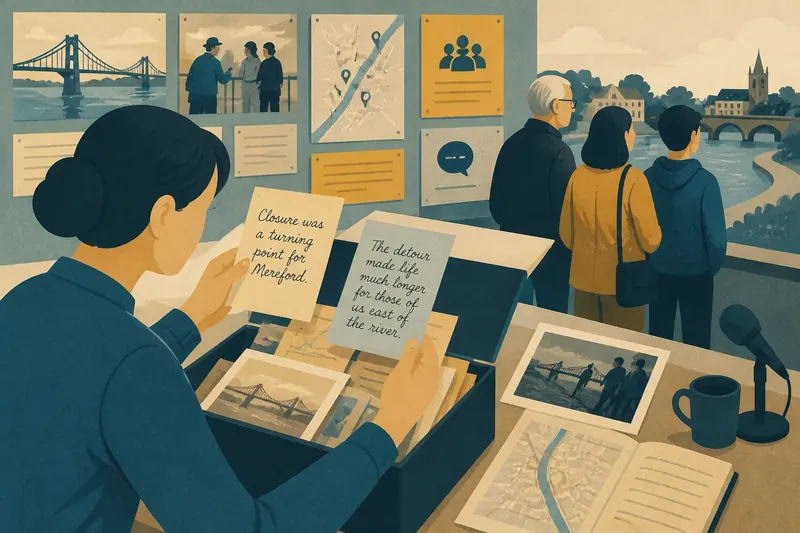
A volunteer at the town library opens a box about the old Riverside crossing. One note calls its closure a turning point; another describes the longer journey it imposed on people living east of the river. The papers do not add up to one account, and that is the point: the myth of a single shared memory can hide what a public record has left out.
Imagine the fictional town of Mereford. Its council is preparing a display about the crossing, which served as a daily route and a place to meet before it closed. Rather than asking residents to agree on what the closure meant, the committee needs to make the record open to additions and corrections. The task is less like composing a town motto than keeping a door from sticking.
Memory stays unfinished
A public account is often treated as if it should settle the past. But a display cannot make every resident’s experience fit neatly together, and agreement is not the same as completeness. People may remember the same change through the journeys they made, the work they did, or the stories their families passed down.
For Mereford, a retired shopkeeper recalls more visitors returning to the market after the replacement crossing opened. A former bus driver remembers passengers stranded far from their usual stop during the detour. A teenager whose family moved to the neighbourhood later says the draft makes local history sound closed to anyone who arrived afterwards.
These accounts do not simply compete to answer what happened. Each asks who gets to appear in the town’s memory, and whether the record leaves room for those who were absent from the original decision or arrived later.
Build an open record
The committee invites written recollections, audio recordings and marked-up maps, then explains how further material can be offered. Each item carries a short description of its source and context. The point is not to create a perfect archive on the first attempt; it is to make the next contribution possible without pretending the existing display speaks for everyone.
A family story about carrying groceries across the bridge can be included as a recollection passed down through generations. It need not be discarded because the contributor did not experience the event directly, nor presented as proof of every detail. Naming how a memory reached the present lets visitors understand both its value and its limits.
Imagine a resident offers a photograph of a handwritten route notice, but cannot say when it was made. The committee records who supplied it, marks the date as unknown and adds it to the display only after permission to share it is clear. If someone later identifies the notice, that information can be added; until then, the label does not guess.
Leave room for additions
A finished-looking panel can discourage people from correcting it. Mereford’s committee therefore adds a small note inviting further recollections and explaining where they can be sent. It also describes what the display does not contain, such as accounts from people who could not be reached during its preparation.
That invitation should be specific enough to use. A contact method, a brief explanation of what information is useful, and a clear statement that contributions may not all be displayed are more helpful than a general appeal to “share your story”. If an institution’s rules or a contributor’s consent are involved, follow its permissions process and seek qualified guidance where needed.
- Check whether each item has a named source; if it does, record that source with permission, and if it does not, label the source as unknown rather than guessing.
- Check whether a recollection is direct or inherited; if the contributor experienced the event, identify it as a personal recollection, and if it came through family or neighbours, say so.
- Check whether dates and places are supported by the item; if they are, include the known details, and if they are uncertain, mark them as uncertain or leave them out.
- Check whether permission covers public display; if it does, use the material within that permission, and if it does not, withhold it or ask the contributor before proceeding.
- Check whether the display explains how people can offer corrections; if it does, make the route easy to find, and if it does not, add a contact method or explain why one is unavailable.
- Check which voices are absent from the collection; if the committee can reach them, invite contributions, and if it cannot, state that limit rather than implying the record is complete.
Keep the record open?
Does a community need one shared story?
No. Neighbours can share public places and civic questions without agreeing on one account of the past. A record can give different memories a common setting without forcing them towards a common conclusion.
Can inherited memories belong in a display?
Yes, if the display identifies them as stories passed down rather than direct recollections. Such accounts can show how family memory shapes a person’s connection to a place.
What should happen when an account changes?
Keep the earlier version in the archive where appropriate, and explain what was amended and why. If new information is uncertain, mark it as such rather than silently replacing one confident claim with another.
How can visitors add a memory?
Offer a clear contact route and say what details help, such as the place, approximate period and relationship to the event. Make clear that a contribution may inform the record without appearing in the display.
Make changes visible
Suppose Mereford’s first display says the closure “brought the town together”. A later visitor points out that the phrase overlooks the detour’s effect on eastern residents. The committee could record the comment, revise the panel to identify whose experience it describes, and keep a note explaining the change. The result would not settle how everyone felt; it would show that the public account can be corrected.
This approach avoids treating a shared past as a finished possession. The myth of a single shared memory gives way to a more useful question: who can still add to the record, and what will happen when they do? A public display that answers plainly is easier to trust than one that mistakes a polished panel for a complete town.