Before the Motto: How Short Civic Phrases Found a Public Voice
Short civic phrases move from speech to public display in several ways. See how spoken use, print and institutional adoption shape their meaning and public voice.
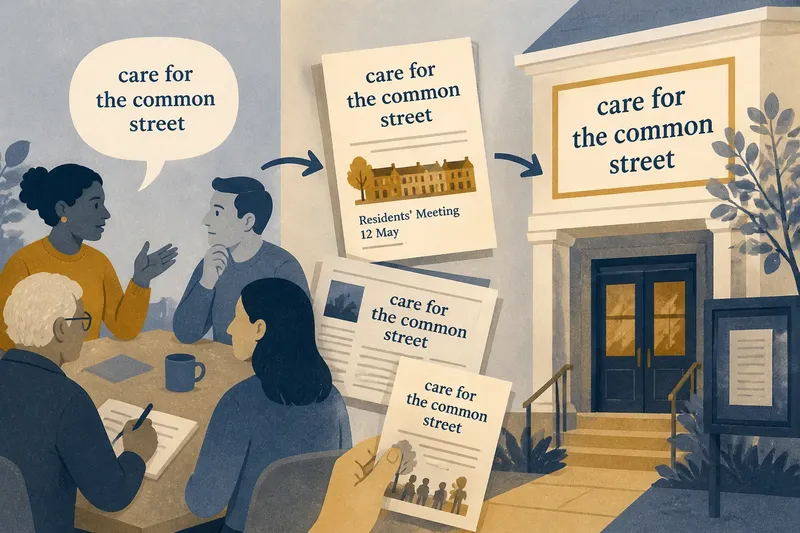
A phrase painted above a town-hall entrance can look as if it has always belonged there. Short civic phrases, though, often begin less formally: in a speech, a meeting, a chant or an ordinary exchange about what people owe one another. Their move into public display changes more than location. It changes who can repeat them, who appears to speak for a community and what kind of belonging the words suggest.
There are three common routes from spoken civic language to a phrase fixed in public view. One keeps the words close to the occasion that produced them; another carries them through print; a third selects and endorses them through an institution. Each gives the phrase a public voice, but not the same voice.
Speech in context
The first route is to leave a phrase attached to the occasions that produce it. A neighbourhood meeting might return to an expression about shared responsibility; a public gathering might repeat a line about welcome or mutual care. In this route, meaning comes from speakers, listeners and circumstances rather than an official inscription.
That connection allows people to adapt the words to a new problem, dispute their meaning or stop using them when they no longer fit. The language stays answerable to those who say it. A phrase heard in a meeting can carry the texture of disagreement: a pause before it, a sceptical response, a speaker’s emphasis. A permanent display usually leaves those things out.
The limitation is reach. Spoken language depends on people being present, remembering the words and choosing to pass them on. Newcomers may encounter the phrase only through second-hand explanations; residents who miss the gathering may never hear it. Flexibility also makes it harder to recognise the same wording from one occasion to the next.
This route suits communities that want civic language to remain open to participation and change. It is especially apt when a phrase grows from ongoing conversation rather than a settled decision about public identity. Organisers can record the wording and the occasion, while acknowledging that a transcript does not capture the whole event.
Keep the phrase close to the people and occasions that give it meaning.
Print carries words
A second route begins when spoken words are written down and carried beyond their first setting. A handout, local newspaper, meeting notice or leaflet can preserve a line for people who were not in the room. Later, a plaque, banner or noticeboard may display wording that has already travelled through these less permanent forms.
Print makes civic language repeatable. Readers can see the same sequence of words, pass it on and compare versions. That consistency helps a phrase become familiar without requiring every resident to attend the same event. It can also bring the words into settings beyond the original conversation, such as a school entrance or a local service counter.
But print is not a neutral container. Someone decides what to quote, where to break a sentence and whether to name the speaker or occasion. Detached from its setting, a phrase can sound more unanimous than it was. A line offered as one person’s proposal may look like a settled community view once it appears repeatedly without attribution.
Imagine a residents’ meeting where people use the phrase “care for the common street” while discussing a neglected lane. A volunteer puts the words on a meeting notice, with the date and subject beneath them. Later readers can then recognise the phrase as part of a particular discussion, rather than assume every resident has adopted it as a civic pledge.
This route suits groups that want a phrase to travel while retaining a connection to its source. Editors should preserve enough context to show who used the words, on what occasion and whether they were proposed, repeated or formally accepted.
When printing civic language, preserve the context that stops repetition from looking like consent.
Institutional adoption
A third route is formal selection. A council, civic organisation or other public body may adopt a short phrase for a building, document, ceremony or recurring notice. The institution gives the words a stable place and a recognisable channel through which residents can encounter them. It also lends them a particular kind of authority.
That authority can be useful. A phrase at a public entrance or in a civic document signals that the institution considers it relevant to its public role. People who never attended the original discussion can encounter it. The words may also provide a shared reference point for staff, visitors and residents.
Formal adoption changes the relationship between phrase and speaker. The institution becomes the implied speaker, even if the words began elsewhere. A slogan on a wall may therefore seem more settled, representative or enduring than the process behind it warrants. The neat lettering can conceal a long argument about who was invited to contribute and whose words were chosen.
Institutional language must also work in places where people have little time to interpret it. A phrase at a doorway may be read in passing; a line in a document may sit among instructions and notices. Concision makes display legible, but can leave important ideas unstated. Location, design and explanatory material all affect whether the words feel welcoming, ceremonial or merely administrative.
This route suits a community that wants a phrase to serve a continuing public purpose and is prepared to take responsibility for selecting it. A clear account of the decision can distinguish institutional endorsement from a claim that everyone shares the same view. Any accompanying explanation should make the phrase’s civic purpose intelligible without turning a wall into committee minutes.
Adopt a phrase formally only when the institution is willing to own the decision behind it.
Choosing a route?
Who can change the words?
If residents should revise the wording through continued discussion, spoken use keeps that possibility close. If consistency matters but the phrase should remain tied to its source, print can preserve it with context.
How far should the phrase travel?
Speech reaches people present at an occasion, while print can reach readers beyond it. Institutional display offers a stable public location, but makes the institution the most visible speaker.
What should a newcomer understand?
A phrase shown without its origin may be mistaken for a unanimous or official position. A short note naming the occasion or adopting body can clarify what the words represent and what they do not claim.
When is public display appropriate?
Display makes sense when the words have a continuing civic purpose and people have reason to encounter them beyond the original conversation. If the phrase depends on a particular debate, keep that setting visible rather than presenting the words as timeless.
Make the choice legible
Say a fictional neighbourhood group is deciding what to do with the phrase “care for the common street”, first used during a meeting about a neglected lane. Its starting point is a phrase with an identifiable occasion, but no formal adoption. The group can make the choice by checking the following:
- Check whether residents still use the phrase in conversation. If they do, keep it in spoken use and invite further discussion; if they do not, ask whether the wording still fits before circulating it.
- Check whether the original meeting date and subject are known. If they are, include them on a notice; if they are not, describe the source cautiously rather than implying a precise record.
- Check whether the phrase was proposed, repeated or formally accepted at the meeting. If it was only proposed, label it as a proposal; if it was accepted, state who accepted it and through what process.
- Check whether the intended readers will understand “common street” without explanation. If they will, use the phrase plainly; if not, add a brief note about the lane and the discussion.
- Check whether the group wants the words to represent an institution. If it does, record the adopting body’s decision and explain it; if it does not, attribute the phrase to the meeting rather than presenting it as official.
- Check whether a noticeboard or entrance would make the phrase look permanent. If permanence is intended, include its source and purpose nearby; if it is not, keep the wording on a dated handout that can be revised.
In this invented situation, the group confirms that the phrase was proposed at the meeting, that the date and subject are recorded, and that residents still use it. It does not want to speak on behalf of an institution, and it expects some passers-by to find “common street” unclear. The resulting decision is to print the phrase on a dated meeting notice, attribute it to the discussion, and add a short explanation of the lane. That keeps the words in circulation without suggesting formal adoption or unanimous agreement. If the group later wants a lasting display, it will need to make and explain that separate decision.
The routes need not be rivals. A phrase may be spoken before it is printed, and printed before an institution adopts it. The important distinction is whether a display accurately conveys how the words arrived there. Public language should not borrow the authority of a community’s voice while hiding the choices that shaped it.
Before a short civic phrase enters a lasting public setting, ask who first said it, who selected it, who can challenge its use and what a passer-by is likely to infer. For a phrase moving from speech to public display, that record keeps the words connected to civic life rather than letting tidy lettering do all the speaking.